
Maths
Text
At Bosley St Mary's CE Primary School, we believe that every child can achieve and flourish in mathematics. We aim to develop confident, enthusiastic mathematicians who enjoy exploring numbers, recognising patterns, solving problems and understanding the importance of mathematics in everyday life.
Our mathematics curriculum follows the National Curriculum for England and is built around three essential aims:
- Fluency: Developing secure mathematical knowledge, efficient methods and the ability to recall and apply key facts confidently.
- Reasoning: Encouraging children to explain their thinking, make connections, justify their answers and use accurate mathematical vocabulary.
- Problem-solving: Equipping children to apply their knowledge and skills to familiar and unfamiliar challenges, both independently and collaboratively.
How We Teach Mathematics
We use First4Maths to support a carefully sequenced, mastery-based approach to teaching mathematics from the Early Years through to Year 6.
Our teaching combines explicit instruction, practical exploration, discussion and purposeful practice. Children develop a deep understanding of mathematical concepts before progressing to increasingly complex learning.
Mathematics lessons follow a clear structure:
- Fluency and retrieval: Revisiting previous learning, practising key mathematical facts and developing confidence with numbers.
- Teach and explore: Introducing new concepts through clear explanations, modelling, mathematical discussion and guided practice.
- Strive for Five: Completing five carefully selected questions to demonstrate understanding and secure fluency before moving into deeper learning.
- Independent practice and challenge: Applying learning through increasingly challenging questions, mathematical reasoning and problem-solving activities.
Throughout lessons, teachers check understanding, provide immediate feedback and address misconceptions to help children make progress.
Building Mathematical Understanding
We use a concrete–pictorial–abstract (CPA) approach to help children develop a secure understanding of mathematical concepts.
- Concrete: Using practical resources and manipulatives to explore mathematical ideas.
- Pictorial: Using drawings, diagrams and representations to develop and explain understanding.
- Abstract: Using numbers, symbols and mathematical language confidently and accurately.
- These approaches are used flexibly to support understanding, encourage independence and help children make connections between mathematical ideas.
Mathematics for Every Learner
We maintain high expectations for every child, recognising that children develop mathematical understanding at different rates.
Learning is carefully planned to meet the needs of our mixed-age classes, with appropriate scaffolding, additional practice and opportunities for greater depth. Children who need further support receive targeted teaching to strengthen their understanding, whilst those who are ready are challenged to reason more deeply and solve increasingly complex problems.
From the earliest stages of learning, we prioritise number sense, mathematical language and practical experiences to build secure foundations.
Mathematics Beyond the Classroom
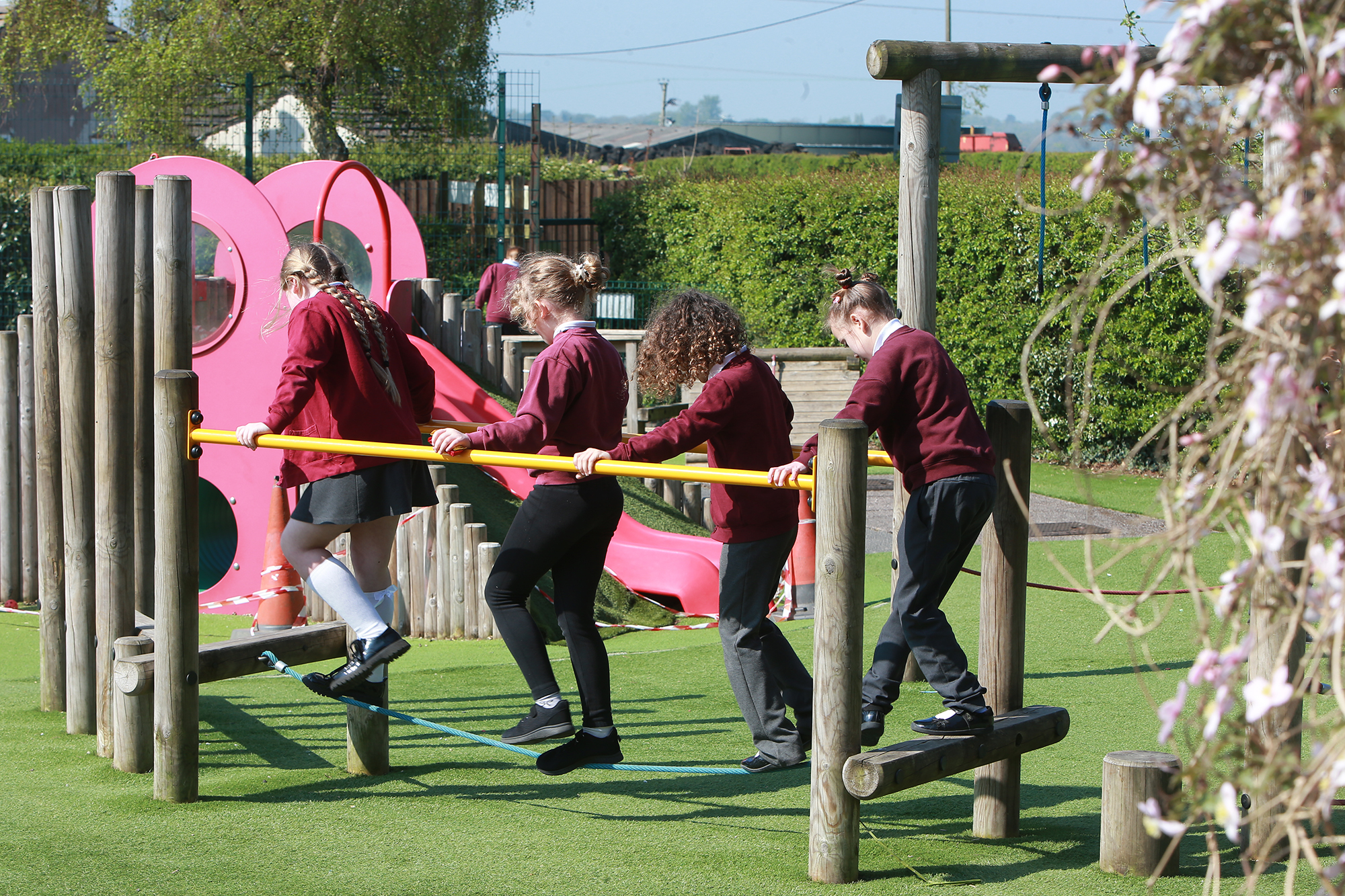
We encourage children to recognise and apply mathematics in the world around them. Through outdoor learning, practical investigations and connections with other curriculum subjects, children develop an appreciation of how mathematics helps us understand and navigate everyday life.
Our ambition is that every child leaves Bosley with strong mathematical foundations, confidence in their abilities and the curiosity and resilience to approach new challenges successfully.
Expanders
-
Leadership and Management
The subject leader's role is to empower colleagues to teach mathematics to a high standard and support staff in the following ways:
-
By keeping up to date on current issues; disseminating relevant information and providing training for staff members (either directly or through other professionals)
-
Leading by example by modelling lessons or styles of teaching
-
Having a knowledge of the quality of mathematics provision across the school and using this to provide a coaching and mentoring role
-
Identifying and acting on development needs of staff members
-
Monitoring expectations, provision and attainment across the school and providing feedback to develop practice further in order to raise standards
-
Providing necessary equipment and maintaining it to a high standard
-
-
Monitoring and Evaluation
The quality of teaching and learning is monitored as part of the appraisal process through lesson observations and through the progress and attainment documents. In addition, continuity and progression across the school is monitored by the mathematics subject leader as is the implementation and impact of Assessment for Learning. The mathematics action plan and external advisors identify actions intended to raise standards.
The Mathematics Subject Leader will also provide an annual summary report to the Headteacher in which s/he evaluates the strengths and weaknesses in mathematics and indicates areas for further improvement.
A named member of the governing body is briefed to oversee the teaching and learning of mathematics. The mathematics governor meets, at least termly, with the subject leader to review progress.
-
Partnerships with parents
In September parents are invited to attend a whole school development plan meeting where they are informed of school priorities and year group overviews. Also parents are informed on how they can help child at home by attending English and Mathematics workshops. Parents are kept informed of topics that are being covered through a newsletter sent half-termly. During Parents' Evenings curricular targets are shared and a written report is completed annually in the Summer Term. Homework in Early Years and Key Stage 1 is a choice of activity; they are encouraged to complete an English/mathematics choice on alternate weeks. In Key Stage 2 mathematics homework reinforces class work or curricular target work and aims to promote enjoyment in the subject.