EYFS
Text
Strong foundations, joyful learning and every learner flourishing
At Bosley St Mary's CE Primary School, we believe that every child deserves a happy, secure and ambitious start to their education.
Our Early Years Foundation Stage (EYFS) is a welcoming, nurturing and stimulating environment where children feel safe, valued and excited to learn. Rooted in our Christian vision of Every Learner Flourishing, we celebrate each child's individuality and provide the care, encouragement and opportunities they need to grow in confidence, independence and curiosity.
We believe that early childhood is a valuable stage of life in its own right. Through purposeful play, strong relationships, explicit teaching and rich experiences, we establish the foundations for lifelong learning.
Our provision follows the Statutory Framework for the Early Years Foundation Stage and is informed by national guidance on strong foundations and early child development.
Expanders
-
Intent
What do we want our youngest children to learn and become?
Our Early Years curriculum is ambitious, inclusive and carefully designed to build secure foundations across all seven areas of learning. We aim to:
- Develop communication and language: Build children's vocabulary, listening, understanding and speaking skills, enabling them to express themselves confidently and participate fully in learning.
- Secure strong foundations: Develop early reading, writing, phonics, number sense, mathematical understanding and the physical skills needed for future learning.
- Nurture confidence and independence: Help children develop self-belief, resilience, self-regulation and the ability to manage everyday routines and challenges.
- Encourage curiosity and creativity: Inspire children to explore, investigate, imagine, ask questions and develop their own ideas.
- Build positive relationships: Develop kindness, empathy, cooperation and a sense of belonging within our school family.
- Develop physical confidence: Strengthen gross and fine motor skills through movement, outdoor learning and practical experiences.
- Broaden children's understanding of the world: Provide opportunities to discover different people, places, cultures and environments, developing respect, wonder and curiosity.
- Recognise every child's potential: Identify individual strengths and needs, providing appropriate support and challenge so that every child can flourish.
Our curriculum encompasses the seven areas of learning within the EYFS framework:
Prime Areas Specific Areas Communication and Language Literacy Personal, Social and Emotional Development Mathematics Physical Development Understanding the World Expressive Art and Design These areas are interconnected, ensuring children develop the knowledge, skills and experiences needed for their next stage of education.
-
Implementation
How do we bring learning to life?
In Blossom Class, we combine high-quality teaching, purposeful play and carefully planned continuous provision to create meaningful learning experiences.
We recognise that children learn through exploration, movement, interaction and first-hand experience, alongside clear explanations, modelling and direct teaching.
Our approach includes:
- Strong relationships and a nurturing environment: Creating a calm, welcoming and inclusive space where children feel secure, develop positive relationships and are ready to learn.
- Explicit teaching of essential knowledge and skills: Carefully planned teaching of phonics, early reading, writing, mathematics, communication and language, alongside opportunities to practise and apply learning.
- Purposeful play and continuous provision: Providing well-organised indoor and outdoor learning environments where children explore, revisit and deepen their knowledge through meaningful activities.
- High-quality interactions: Adults model language, introduce vocabulary, ask thoughtful questions and extend children's thinking through conversation, demonstration and shared experiences.
- Carefully sequenced learning: Building on children's starting points, identifying essential knowledge and skills, and revisiting learning to secure understanding.
- Developing independence and positive learning behaviours: Explicitly teaching routines, cooperation, self-regulation, perseverance and care for others and the environment.
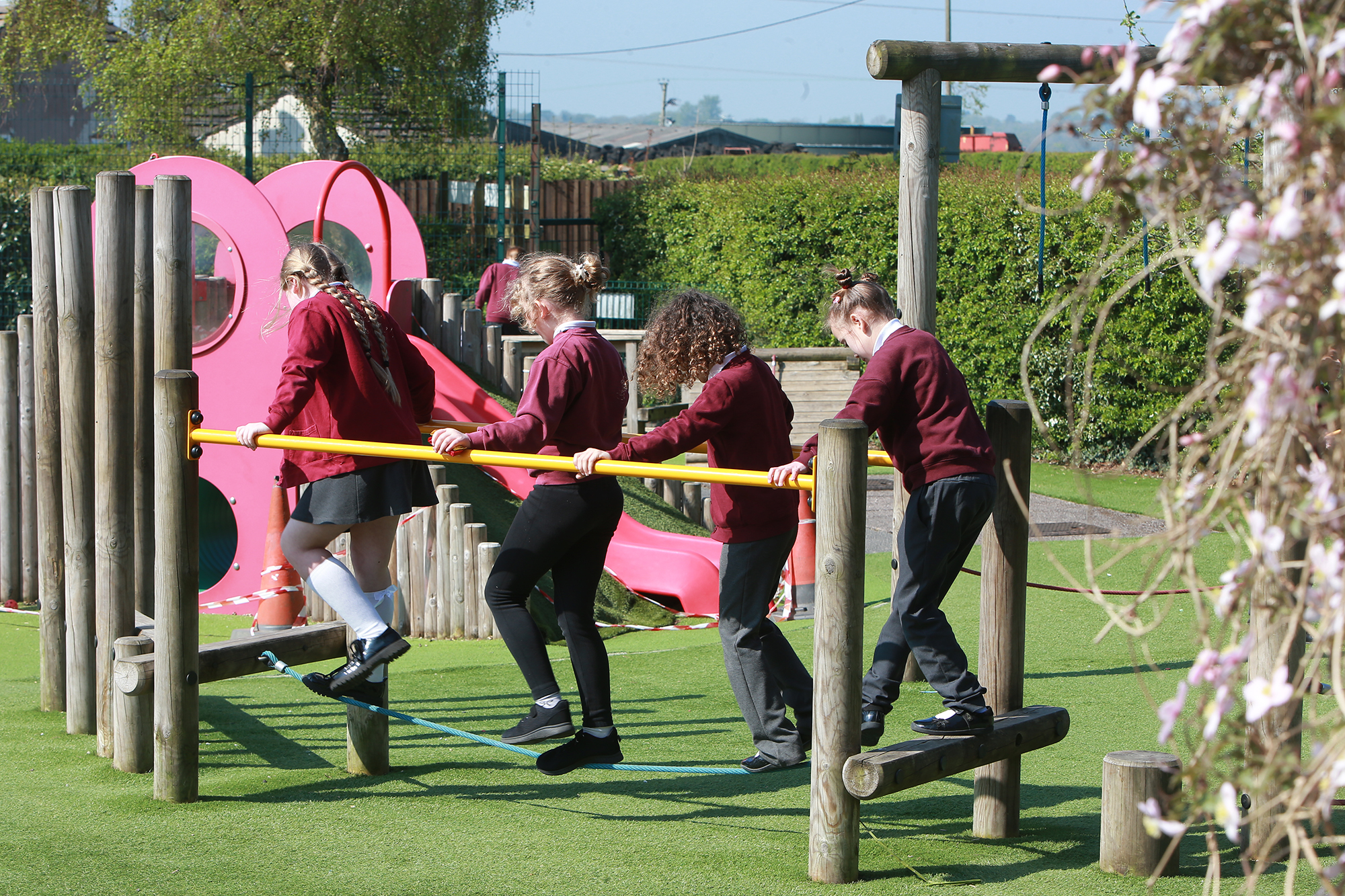
- Outdoor learning and exploration: Making full use of our outdoor environment, Forest School and rural surroundings to develop curiosity, physical skills and an appreciation of the natural world.
- Inclusive and responsive teaching: Identifying emerging needs early, adapting provision and providing targeted support to ensure every child can participate and succeed.
- Partnership with families: Working closely with parents and carers, recognising their vital role as children's first educators and building strong relationships between home and school.
How Children Learn
We place particular importance on the three characteristics of effective teaching and learning:
- Playing and exploring: Children investigate, experience new things and develop the confidence to have a go.
- Active learning: Children concentrate, persevere through challenges and take pride in their achievements.
- Creating and thinking critically: Children develop their own ideas, make connections, explore different approaches and solve problems.
These characteristics are developed through both child-initiated and adult-led experiences, helping children become increasingly confident, motivated and independent learners.
Strong Foundations for Future Learning
Our approach places particular emphasis on communication and language, early literacy, mathematics, physical development and personal, social and emotional development.
We use Read Write Inc. Phonics to establish secure early reading skills, alongside rich storytelling, songs, rhymes and opportunities for early writing.
Mathematical understanding is developed through explicit teaching, practical resources, discussion and purposeful play, helping children build number sense, recognise patterns and develop confidence with mathematical ideas. We use First4Maths as our mathematics scheme.
Through carefully planned experiences, children develop the knowledge, vocabulary, physical control and learning behaviours that prepare them for future success.
-
Impact
How do we know our youngest children are flourishing?
The impact of our Early Years curriculum is reflected in what children know, remember, say and do, as well as their growing confidence, independence and enjoyment of learning.
We aim for children to:
- Communicate confidently: Express their needs, ideas and feelings, listen attentively and engage in meaningful conversations.
- Develop secure foundations: Make strong progress in early reading, writing, mathematics and the essential knowledge and skills needed for Year 1.
- Become independent and resilient: Approach challenges positively, persevere, manage routines and develop increasing confidence in their abilities.
- Demonstrate curiosity and creativity: Explore ideas, ask questions, investigate and use their imagination.
- Build positive relationships: Show kindness, respect and empathy, cooperate with others and develop a strong sense of belonging.
- Develop physical confidence: Demonstrate increasing coordination, control and independence in movement, self-care and practical activities.
- Develop a love of learning: Show enthusiasm, concentration and pride in their achievements.
- Be ready for their next steps: Move confidently into Year 1 with secure foundations and a positive attitude towards learning.
How We Evaluate Impact
Assessment is an integral part of everyday teaching and learning. We use:
- Observations and interactions: Understanding children's developing knowledge, skills, interests and needs through their play, conversations and learning.
- Ongoing assessment: Checking understanding and identifying opportunities for additional support, challenge and next steps.
- Children's learning and experiences: Reviewing their work, achievements and the ways they apply learning in different contexts.
- Partnership with families: Sharing information about children's development and recognising achievements at home and school.
- Statutory assessments: Completing the Reception Baseline Assessment and Early Years Foundation Stage Profile in line with national requirements.
- Transition information: Working closely with colleagues to ensure continuity of learning and a successful move into Year 1 and Willow Class.
We recognise that children develop at different rates and from different starting points. Our focus is on ensuring that every child makes meaningful progress, experiences success and receives the support they need to flourish.
Text
Our ambition is for every child to leave Blossom Class as a confident, curious, capable and compassionate learner, with secure foundations, a love of learning and the readiness to embrace the next stage of their educational journey.